


Process Control
Traditional Electric Actuator Comparison
Traditional electric actuators use an electric motor and some form of gear train reduction to move the valve. Originally for on-off control, some of these mechanical systems have been modified for use in full modulating control, but with limited success. Many of these electric actuators can only modulate from 1200 to 3600 starts/hour and have a minimum position change of 1%. In addition, these electric actuators operate slowly, meaning they are not suitable for rapidly changing process parameters such as pressure.

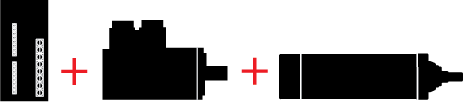
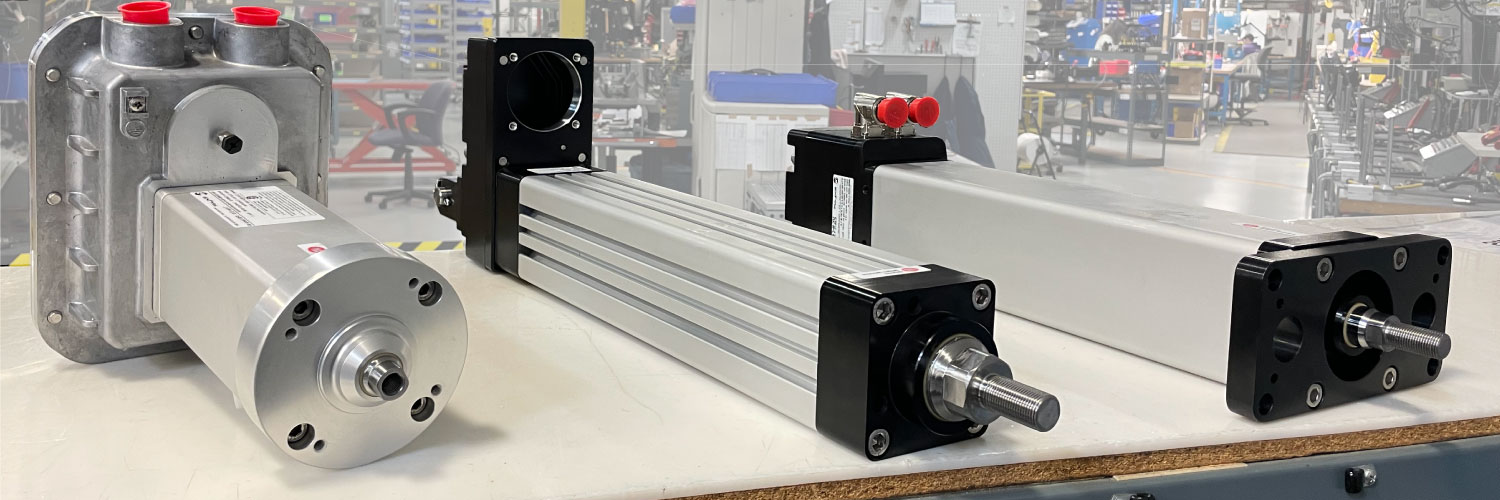
One of the main differences with the Exlar solution is how we convert the rotary motion of a motor to a linear force, or ¼ turn torque. For linear, the use of a roller screw sets Exlar apart in simplicity, life and performance.
The roller screw is extremely efficient, provides very precise positioning capabilities and has a life well over 15 times that of a lead screw typically use in standard electric actuators. The design allows the motor to be wrapped directly onto the outer shell; rotating the roller screw up to the full RPM’s of the motor. This allows the linear movement to be as fast as 30 inches per second; speeds unheard of in typical electric actuators.
.jpg)
Traditional electric actuators rely on a gear train of some type such as worm gears or spur gears plus an additional lead screw assembly to convert the motors rotation to a linear force, which drastically limits its life. Lead screws have sliding friction surfaces that cause rapid heating, and continuous operation is likely to result in a screw failure. The low efficiency limits the operating rpm and duty cycle significantly. On the other hand, the planetary rollers in a roller screw are all constrained by their journals at each end of the roller. The rollers never touch each other, preventing such friction.
Exlar also uses a servo motor, which provides closed loop feedback, high torque to inertia ratios, 90% efficiency and reserve power of up to 2x continuous power. Speed can be up to 5000 RPM providing unprecedented response time. Duty cycles are 100% continuous. More information about Exlar’s Servo Motor can be found here.
In comparison, traditional electric actuators use induction motors that prohibit continuous operation since the motor heat buildup can be excessive. Speed are slow, and positioning is accomplished by pulsing the motor on an off to position.
Finally, the controls and positioner used with Exlar actuators provides closed loops feedback, eliminating the need for limit switches, torque switches or any mechanical means of feedback. The electronic provide a 4-mA input and output, as well as full Modbus RTU capability. Ethernet IP is also available as an option. In addition, extensive diagnostics are available providing insight to the heath of the actuator as well as the valve or damper.
Traditional actuator controls must include the switchgear required to control the electric motor. This can either be reversing contactors or thyristors. Controls use the switchgear to switch the electric motor on or off depending on the signals or commands present.
Exlar’s rotary actuator has all of the benefits of our linear product, but uses a planetary gear head in place of the roller screw. This allows the same performance and life, but in a multi turn package. The Rotary actuator can be mounted directly on the rotary valve, eliminating any linear to rotary conversion hardware.